Datasheet Texas Instruments LM94022-Q1
| Manufacturer | Texas Instruments |
| Series | LM94022-Q1 |
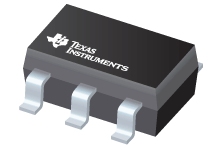
Automotive Grade, В±1.5В°C Temperature Sensor with Multiple Gain and Class-AB Analog Output
Datasheets
LM94022/-Q1 1.5-V, SC70, Multi-Gain Analog Temperature Sensor With Class-AB Output datasheet
PDF, 1.2 Mb, Revision: F, File published: Sep 29, 2015
Extract from the document
Status
| LM94022QBIMG/NOPB | LM94022QBIMGX/NOPB | |
|---|---|---|
| Lifecycle Status | Active (Recommended for new designs) | Active (Recommended for new designs) |
| Manufacture's Sample Availability | Yes | No |
Packaging
| LM94022QBIMG/NOPB | LM94022QBIMGX/NOPB | |
|---|---|---|
| N | 1 | 2 |
| Pin | 5 | 5 |
| Package Type | DCK | DCK |
| Industry STD Term | SOT-SC70 | SOT-SC70 |
| JEDEC Code | R-PDSO-G | R-PDSO-G |
| Package QTY | 1000 | 3000 |
| Carrier | LARGE T&R | LARGE T&R |
| Device Marking | 22Q | 22Q |
| Width (mm) | 1.25 | 1.25 |
| Length (mm) | 2 | 2 |
| Thickness (mm) | .9 | .9 |
| Pitch (mm) | .65 | .65 |
| Max Height (mm) | 1.1 | 1.1 |
| Mechanical Data | Download | Download |
Parametrics
| Parameters / Models | LM94022QBIMG/NOPB | LM94022QBIMGX/NOPB |
|---|---|---|
| Interface | Analog Output | Analog Output |
| Local Sensor Accuracy(Max), +/- C | 1.5 | 1.5 |
| Operating Temperature Range, C | -50 to 150 | -50 to 150 |
| Output Impedance, Ohm | 5.2 | 5.2 |
| Package Group | SC70 | SC70 |
| Package Size: mm2:W x L, PKG | 5SC70: 4 mm2: 2.1 x 2(SC70) | 5SC70: 4 mm2: 2.1 x 2(SC70) |
| Rating | Automotive | Automotive |
| Sensor Gain, mV/Deg C | -5.5 to -13.6 | -5.5 to -13.6 |
| Special Features | Selectable gain setting | Selectable gain setting |
| Supply Current(Max), uA | 8.1 | 8.1 |
| Supply Voltage(Max), V | 5.5 | 5.5 |
| Supply Voltage(Min), V | 1.5 | 1.5 |
Eco Plan
| LM94022QBIMG/NOPB | LM94022QBIMGX/NOPB | |
|---|---|---|
| RoHS | Compliant | Compliant |
Application Notes
- AN-1952 Designing with Thermocouples (Rev. A)PDF, 72 Kb, Revision: A, File published: May 7, 2013
In 1821 Thomas Seebeck discovered the physical phenomenon that when you join two dissimilar metalson both ends and heat one end, a continuous current is created in the thermoelectric circuit . If the otherend is broken, a voltage can be measured that is proportional to the temperature difference between theheated junction (measuring or hot junction) and the open end (reference or cold ju - Low-Voltage Current Loop TransmitterPDF, 519 Kb, File published: Aug 2, 2007
Model Line
Series: LM94022-Q1 (2)
Manufacturer's Classification
- Semiconductors> Sensing Products> Temperature Sensors> Local Analog Temperature Sensors