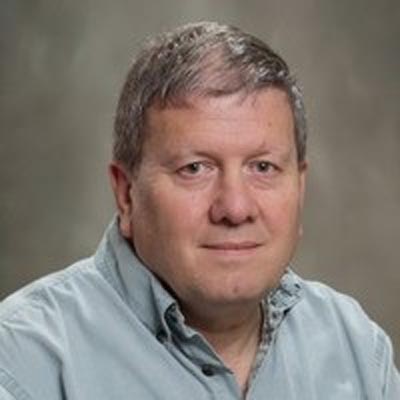
Born and raised in what was then Rhodesia (now Zimbabwe), Aubrey Kagan completed his electrical engineering degree at the Technion, Israel Institute of Technology, and obtained an MBA at the University of the Witwatersrand in South Africa. He immediately started working in electronics and was fortunate enough to be around as microprocessors made their first inroads into industry. He was initially involved with designing controllers for industry and mines, with projects encompassing coffee packaging machines, railroad communication controllers, hydrological data monitors, automatic calorimeters, and diamond sorters. The isolation of South Africa (geographically, economically, and later politically) allowed him to gain a wide range of experiences with many aspects of the industry, including analog and digital circuit design, the use of PCs (including the use of spreadsheets) to gather data, and the early use of CAD.
Aubrey now lives in Toronto, Canada. Here he originally worked on the specifications for the Canadarm 2 (the remote control arm on the International Space Station), but he is now involved with far less grandiose projects. He is Engineering Manager at Emphatec, a Toronto-based design house of industrial control interfaces, signal conditioners, and switch-mode power supplies. Aside from brief forays into the i80960, i8096, and IM6100, all of his experience has been on 8-bit micros – including Intel (8048, 8051, 8080, 8085), RCA (1802), Zilog (Z80, Z8), PIC (16Cxxx), Scenix (SX18), TI (TMS7000, MSP430 – 16 bits!), and Cypress (PSoC). His specialty lies in blending the linear with the digital hardware and then processing in software.
Aubrey has written several technical articles for Circuit Cellar and has contributed several design ideas to EDN and Electronic Design as well as an application note for Cypress Microsystems. He has also made a few contributions to Max Maxfield's "How It Was" series and Max/Brian Bailey's "Travel Nightmare" series. He is the author of Excel by Example: A Microsoft Excel Cookbook for Electronics Engineers.