Looking around at the ubiquitous proliferation of wireless smartphones, it’s easy to assume that the classic wired “landline” phone on a copper loop (thank you, Alexander Graham Bell and others) is a relic of ancient days. And that it’s suitable only for displays at historical museum.
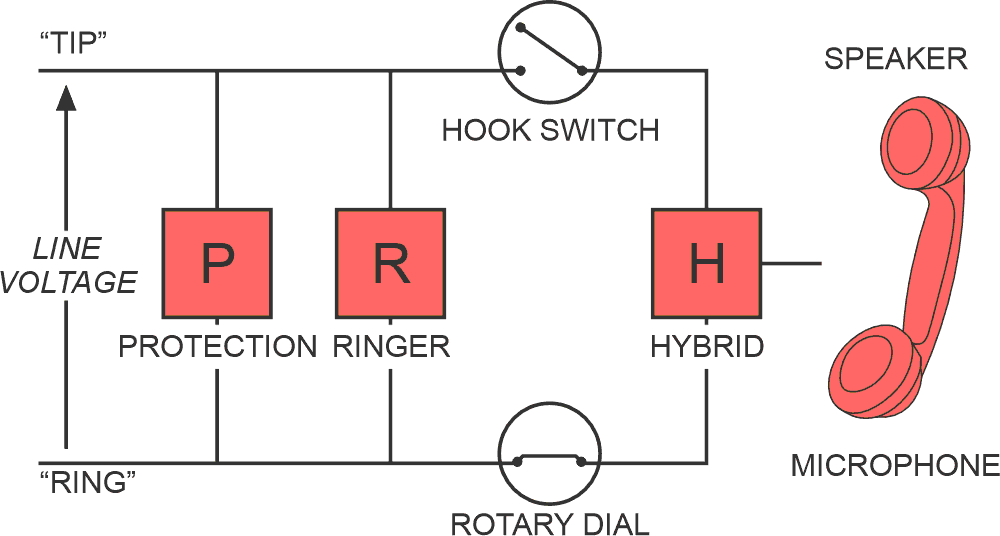
It was colloquially referred to as plain old telephone service (POTS) and brought two-way connectivity to the masses, unlike the telegraph which preceded it or radio which followed it. The circuit was all analog, of course, and conceptually simple (Figure 1).
 |
|
| Figure 1. | The basic copper-loop POTS phone was conceptually simple and easy to understand; in the 1960s, the pulse-generating dial was phased out and tone-based signaling came into use. |
The reality is that this sense of demise and near-total obsolescence is somewhat premature. The market for wired phones splits into two distinct parts: consumer (household) and business, with credible numbers available for both segments. There’s still life in both, though much more in the business segment.
The household POTS line
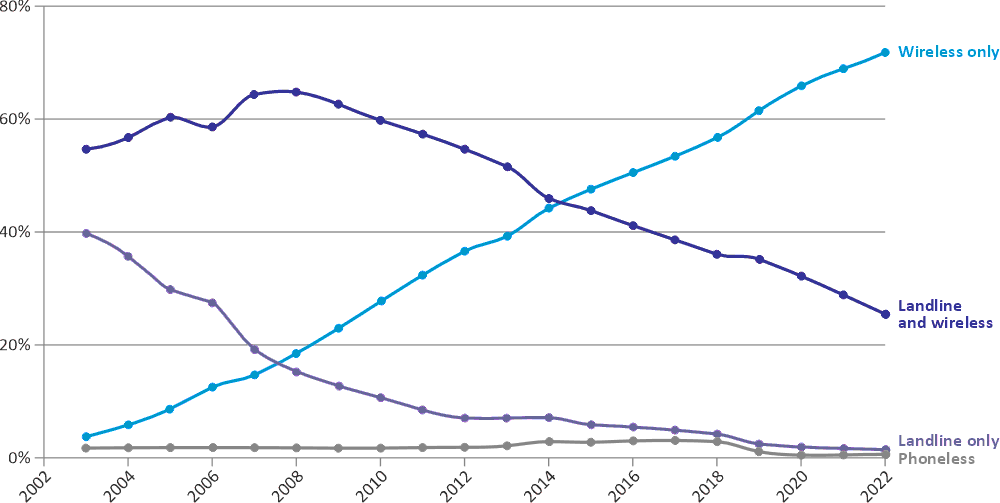
For the households, the trend is clear (Figure 2). There are also numbers available showing the breakdown by age and region; not surprisingly, older people and older areas of the United States (the Northeast) have a higher fraction who still keep the landline in place.
 |
|
| Figure 2. | The trendlines for wired, wireless, and combined household phones are clear and dramatic. |
Landline users have their legitimate reason for staying with POTS. There’s the very high reliability of a properly maintained system, peace of mind knowing that the reassuring dial tone is there, a modest cost in most areas for a basic plan, and generally very good audio quality (yes, there are exceptions to all of these attributes). Then there’s a comfort factor that can’t be denied.
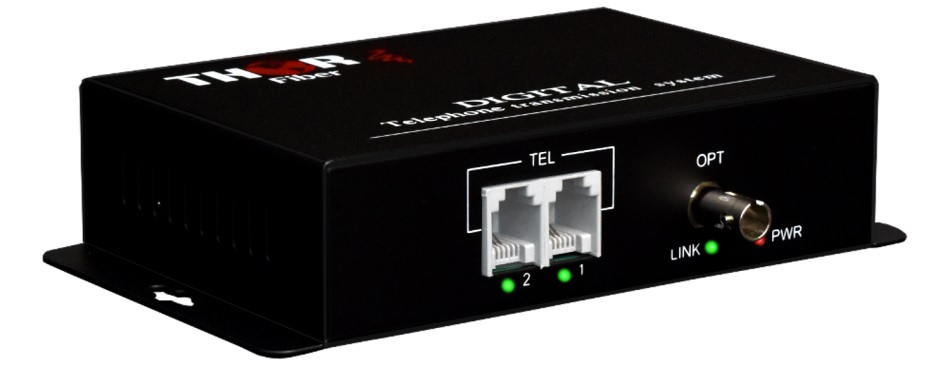
Copper landline users in areas where the local telephone-service provider is switching over to fiber-optic links instead of copper don’t have to give up their phones. Most states and regulatory agencies require that the local telephone company provide a free fiber-to-copper converter, which is installed on the entry panel (Figure 3). If only this avoids the obsolescence due to upgrade carried via modern electronics…hey, we can dream, right?
 |
|
| Figure 3. | For those who want to retain their copper-loop POTS phone while their provider goes to optical fiber lines, interface converters such as this two-line unit provide a transparent bridge. |
This need for upward and downward compatibility is a legacy of the original Bell Telephone System before its breakup. Their rule was that any upgrade had to be compatible with older units in the field and not make those older units obsolete. Furthermore, the Bell System, and later AT&T, worked with its manufacturing arm Western Electric to ensure that products would work reliably for 40 years, which sounds almost unbelievable now.
Even as phones went from “pulse dialing” (where a string of contact closures indicated dialed numbers) to dual tone multifrequency (DTMP), usually called Touch-Tone, the landline central offices continue to support the older protocol (Figure 4).
 |
|
| Figure 4. | The rotary phone with pulse dialing still lives: you can get older refurbished units, or even new ones made to look retro – and they can be interfaced and used. |
For those households who still use a rotary-dial phone, whether due to personal inertia or as a retro-trend “statement”, there are dial pulse-to-DTMF adapters so that vintage phone works with an optical fiber.
The wired business phone
If landline phones were just about old-timers, holdouts, and retro-trends, it wouldn’t be much of a technology story; at best, it would be a cute “filler” story for a slow news day. However, it turns out that upgraded wired phones, physically tied to a desk or wall, are still with us and will be for a while.
There are several reasons for this. First, when you call a mobile phone number, you are calling a person who has that phone, not a place. But what about when you need to call a hotel desk, a doctor’s office, or similar? You want a phone that is assigned to and associated with a physical location, not to an unknown individual. These phones are used everywhere from hospitals to restaurants.
Many building codes mandate them for access in emergencies in public accommodations, such as hotels, both for calling the desk and for the desk to call a given room to see if everything is OK. Also, for some financial operations such as registered stockbrokers, all office calls must be recorded for regulatory compliance, and that is much easier to do with a wired-phone system.
Companies such as Cisco Systems and AT&T do a steady landline phone business. While these phones look like advanced models of old-time landline units, their physical interface is not the old-fashioned, dedicated “circuit-switched” loop of those old days. Instead, many use digitized voice and Internet Protocol (Voice over IP, or VoIP) with Ethernet connectivity to simplify and reduce wiring. They also offer many features, which are now expected, such as call waiting, hold to take another call, caller ID, and more.
Why does the “analog” world care about this? Research firm Synergy Research Group estimates the market for IP phones was worth about $1.3 billion globally in 2024. A landline phone on a copper loop, on an electro-optical converter, or as an IP-connected peripheral, needs lot of analog components for both the audio and the connectivity. Line drivers, amplifiers, filters, duplexers, LEDs, interfaces, surge and overvoltage protection devices… it’s a long list and gets longer if that phone also has a multiline display as most now do.
The numbers add up: A typical 250-room hotel will have more than 300 individual physical phones – including at least one phone in every room, plus in other areas like reception, lobby, fitness centers and back of office. They are there and they are always ready to use. Just because it seems to you that no one is using a particular technology doesn’t mean that’s the case.
Have there been times when you wished you had an old-fashioned hardwired phone with the reliable performance and certainty it potentially provides? Conversely, have you had to explain to someone how to use a pushbutton phone (for instance, what’s dial tone)? And that there’s no need to push a button at the end of the string of dialed numbers.