Upside-down mounting can deliver inductance upsides for surface mount passives and other components.
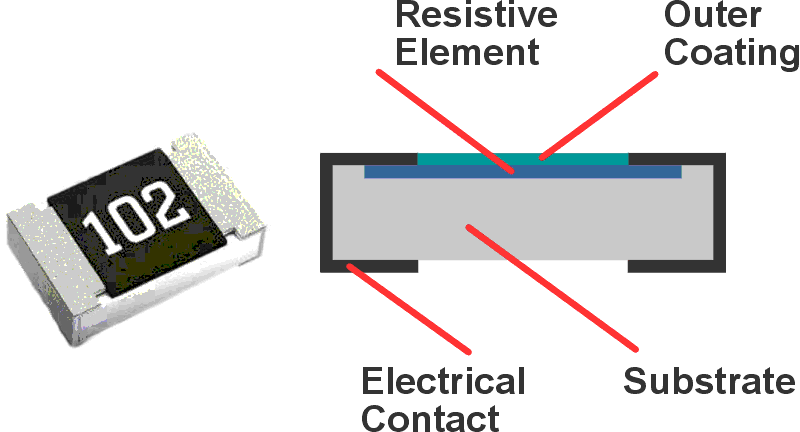
Please visualize the structure of a surface mount resistor as shown in the Figure 1.
 |
|
| Figure 1. | Surface mount resistor constituents include this writeup’s showcase electrical contacts. |
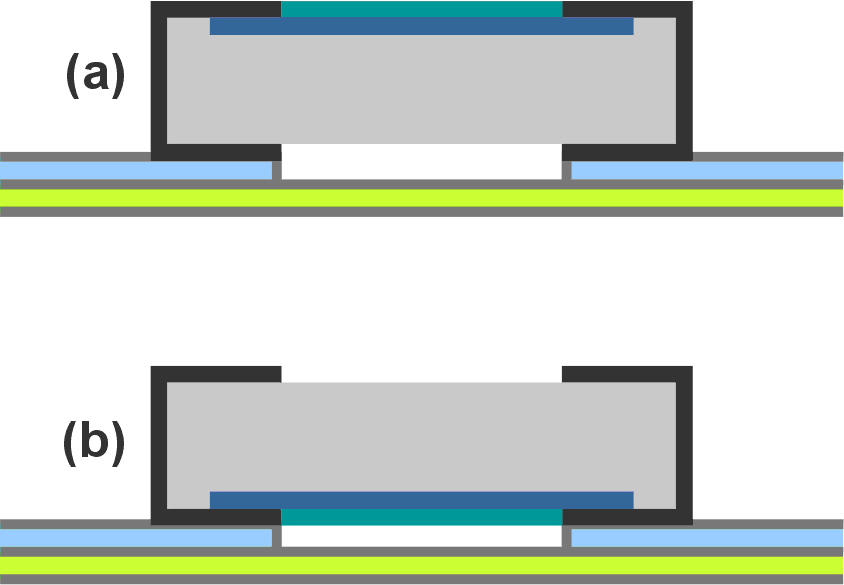
Normally this part would be installed on a circuit board with the outer coating visible for inspection and with the substrate adjacent to the circuit board’s surface. However, if the circuit board’s goodies are operating at microwave frequencies, this might not be the best idea.
There is an alternative, however, as shown in Figure 2.
 |
|
| Figure 2. | A surface mount resistor in its normal-service mounting orientation (a) may be re-positioned for optimal microwave-service operation (b). |
If the surface mount resistor is installed on the circuit board “upside down”, the inductances presented by the electrical contacts will be much reduced versus that of the usual mounting. At microwave frequencies this can be significant, especially if the resistance is 50 Ω in a matched impedance application.