It is often difficult to design an effective thermal-management scheme that minimizes the risk of meltdown or fire. System orientation, placement, or both complicate matters by generating hot spots at varying locations on a PCB (printed-circuit board). A hot-swap switch and carefully placed temperature sensors mitigate thermal issues by disconnecting system power when a temperature exceeds a safe limit.
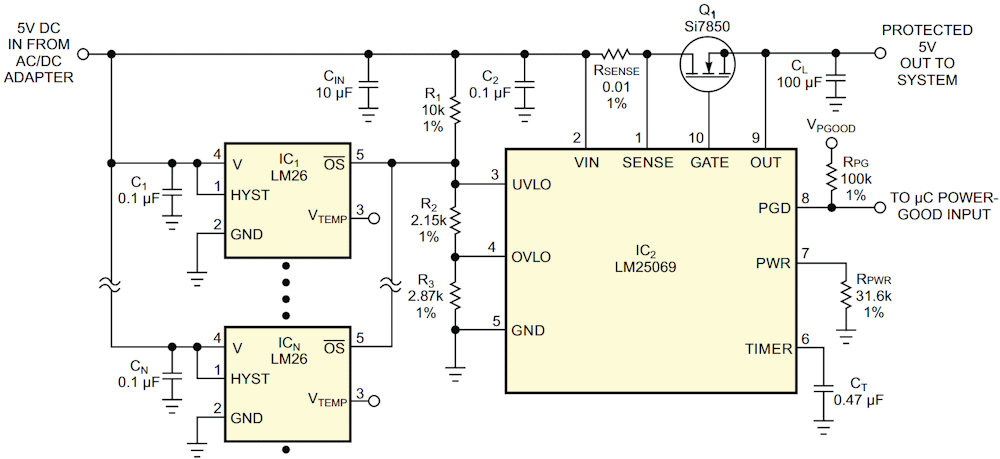
The circuit in Figure 1 uses a hot-swap switch to monitor overvoltage, undervoltage, and overcurrent conditions. When the ambient temperature exceeds a preset threshold, a carefully placed temperature sensor, IC1, forces the hot-swap controller, IC2, to disconnect system power. You can use multiple temperature switches to isolate hot spots when you mount the system in varying orientations. The circuit requires neither a microcontroller nor a costly temperature-monitoring IC. Thermal events cut power to the system using a robust, nondestructive technique.
 |
|
| Figure 1. | Carefully placed low-cost temperature sensors disconnect system power when an overtemperature thermal event occurs. |
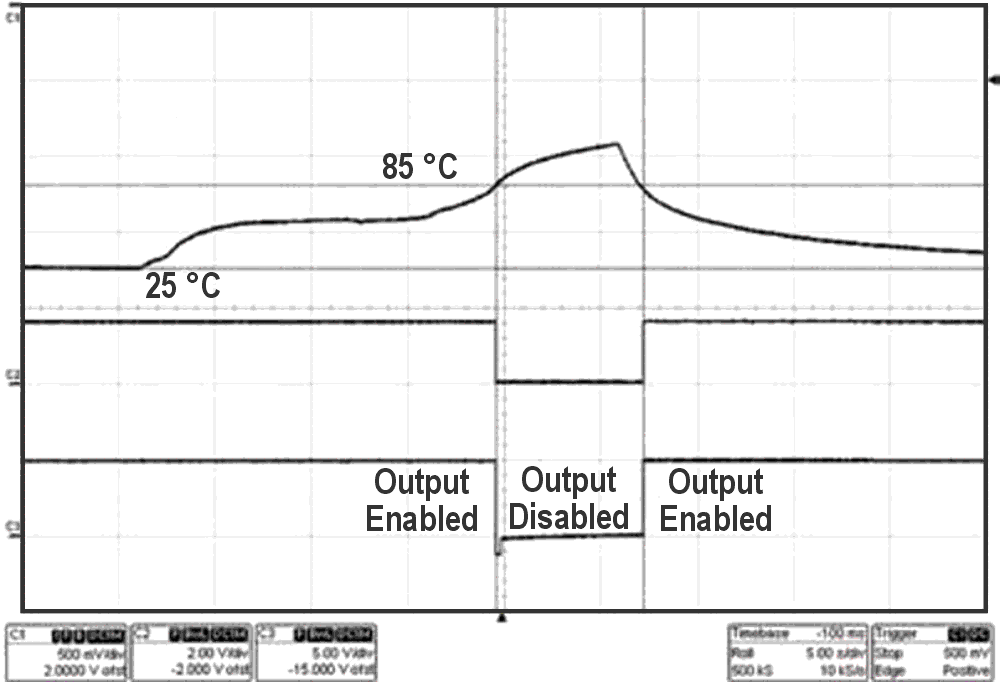
In a typical overtemperature condition (Figure 2), a thermal event (upper trace) causes the LM26 to trip, forcing the LM25069 to disconnect power from the system (middle and lower traces). When the system temperature decreases below the LM26’s trip point, system power returns.
 |
|
| Figure 2. | As the temperature rises above the threshold (top trace), the output of the temperature sensor (middle trace) goes low, forcing the hot-swap switch to disconnect power (bottom trace) from the circuit. |
Incorrect placement or orientation can cause overtemperature events, forcing the system to turn on and off like clockwork; support personnel can easily diagnose this symptom. Inexpensive temperature sensors and an innovative power-limiting hot-swap controller reduce the cost of this circuit to approximately $2 in low-volume applications.