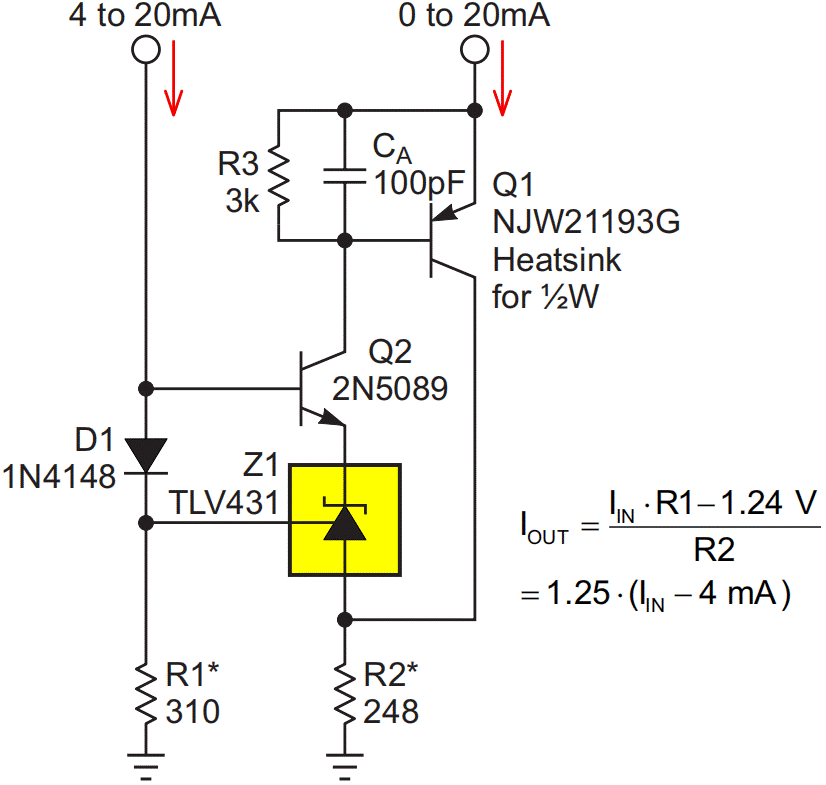
The ubiquity of the 4 to 20 mA current loop in analog process monitoring and control creates possibilities for peculiar designs of circuits for unusual accessory functions. Figure 1 shows an example. It does precision conversion of 4-20 mA to 0-20 mA. That’s useful for accommodating analog inputs that wouldn’t like a 4 mA zero offset.
 |
|
| Figure 1. | The current conversion circuit. |
The core of the circuit is the VIN = I·R1 = 1.24 V to 6.20 V developed by the 4 mA – 20 mA input working into R1 and sensed by the VREF input of Z1. The principle in play is discussed here (Ref. 1).
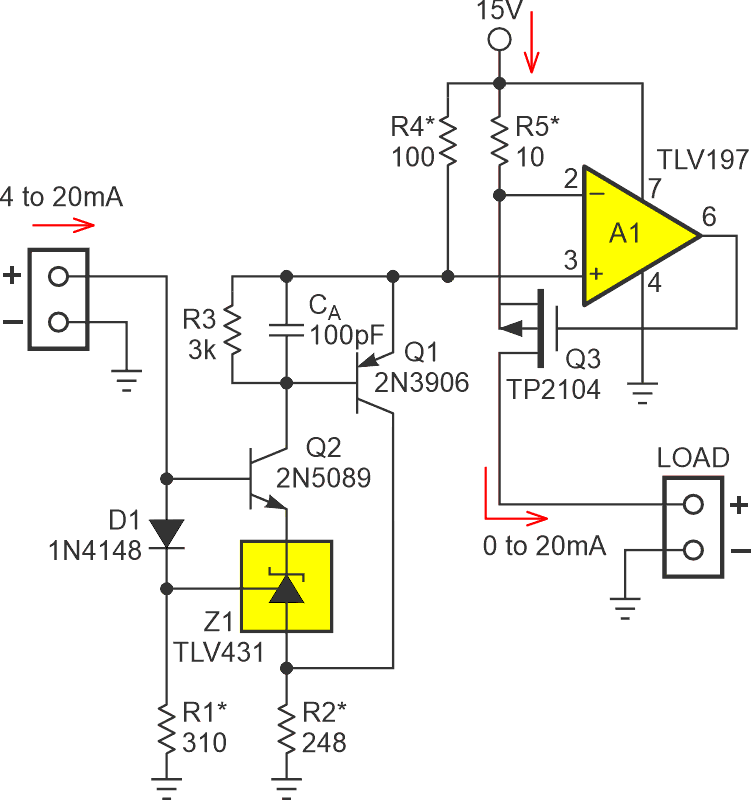
A potentially annoying shortcoming of the Figure 1 design, however, is its current sink output that’s referred not to ground but to the V+ source node, which needs to be at least 8 V. Figure 2 offers an accurate and straightforward fix: an active current mirror as described here (Ref. 2).The input max overhead voltage is 8 V.
 |
|
| Figure 2. | This circuit adds an active current mirror to its predecessor to drive a grounded load. |
References
- Woodward, Stephen. "Full circle current loops: 4mA-20mA to 0mA-20mA."
- Woodward, Stephen. "Active two-way current mirror."