An only slightly less simple followup circuit also ratios sensor capacitance to a reference capacitor to measure micrometers… this time linearly.
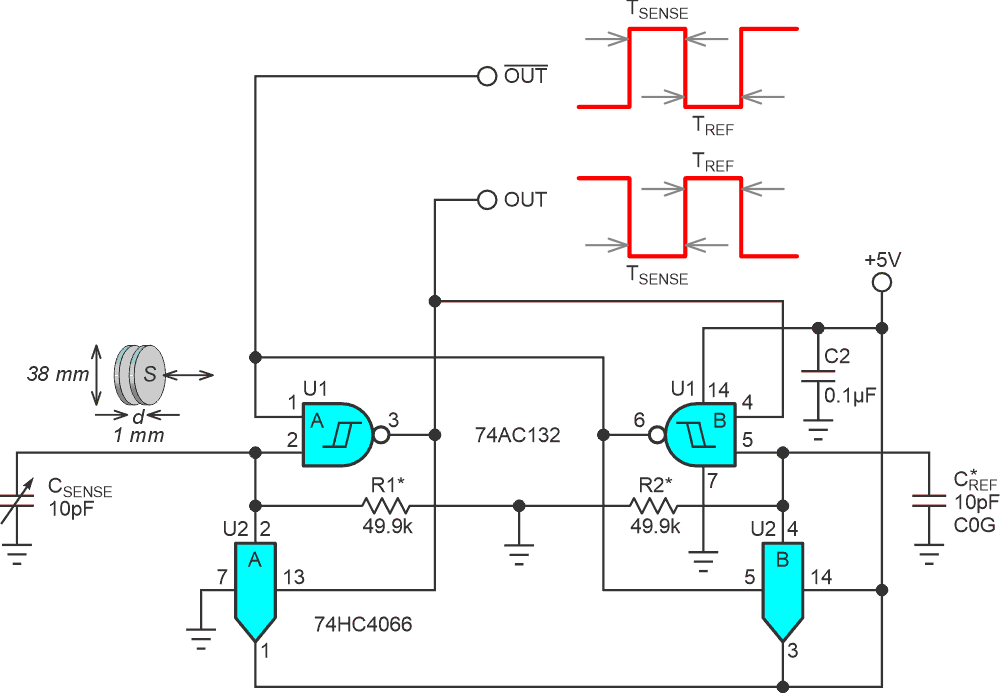
A few weeks ago, Design Ideas published a simple circuit of mine that provides an analog interface to capacitive position sensors (Ref. 1). Figure 1 shows that basic design with its separate complementary outputs: OUT and –OUT.
 |
|
| Figure 1. | The U1a and U1b cross-coupled Schmidt trigger timers form a ~1 MHz RC multivibrator. The TSENSE pulse width is inversely proportional to sensor displacement. |
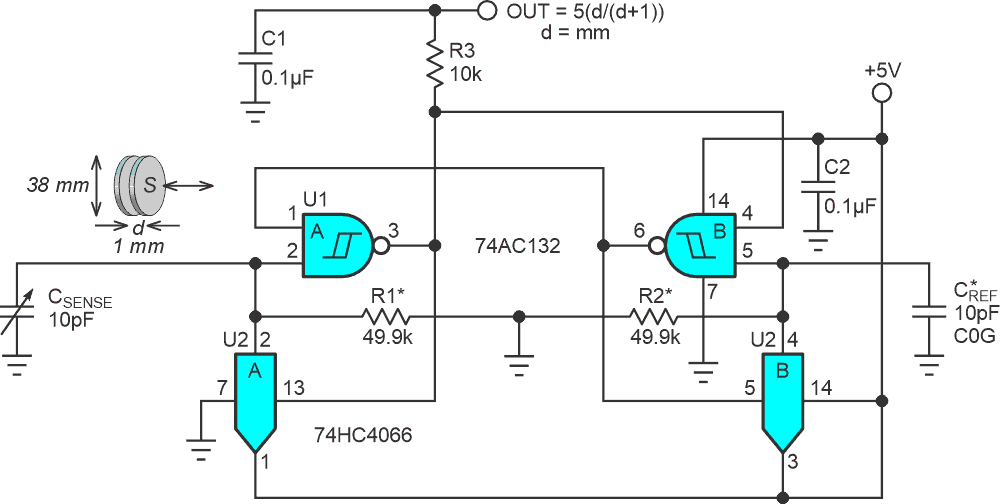
Figure 2 shows the “Simple Simon” (Ref. 2) method it offered for acquisition of the sensor position signal: passive RC averaging of the TSENSE pulse train.
 |
|
| Figure 2. | Passive RC averaging of the TSENSE output yields the analog position output. |
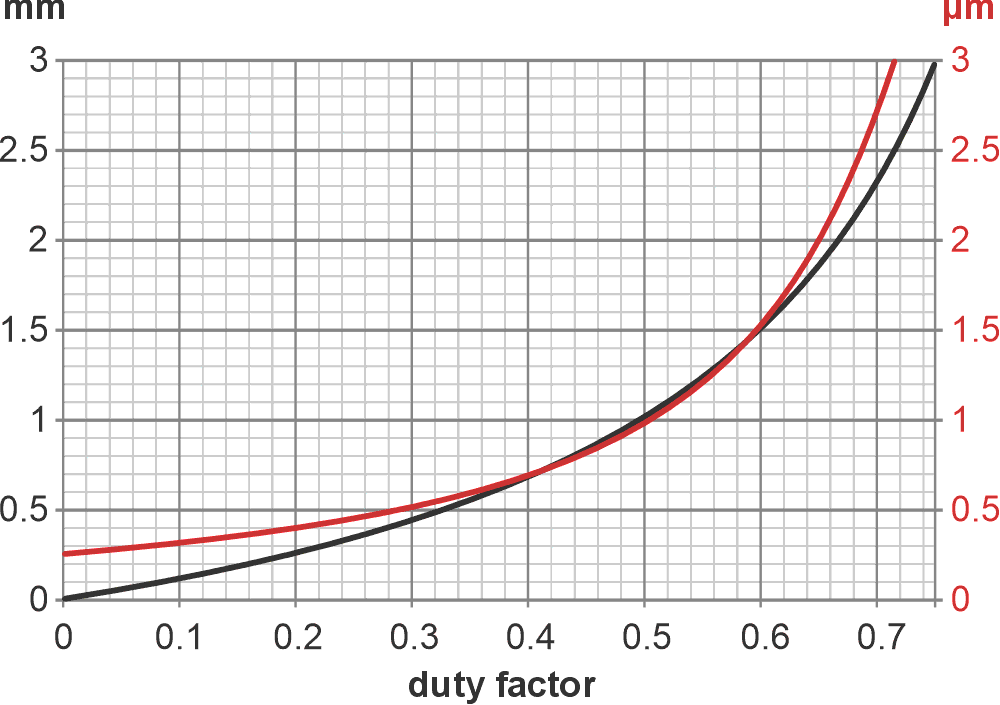
The resulting analog output, as shown in figure 3, provides good range and resolution but is nonlinear.
 |
|
| Figure 3. | This graph shows the sensor performance when OUT is connected to a 12 bit ADC using +5 V for its reference. The black curve (left axis) equals the plate separation (d) in millimeters. The red curve (right axis) equals the ADC lsb resolution in micrometers. |
So, I got to thinking about linearization and the advantages it would provide, and wondering how tough it would be. It turned out to be not that difficult.
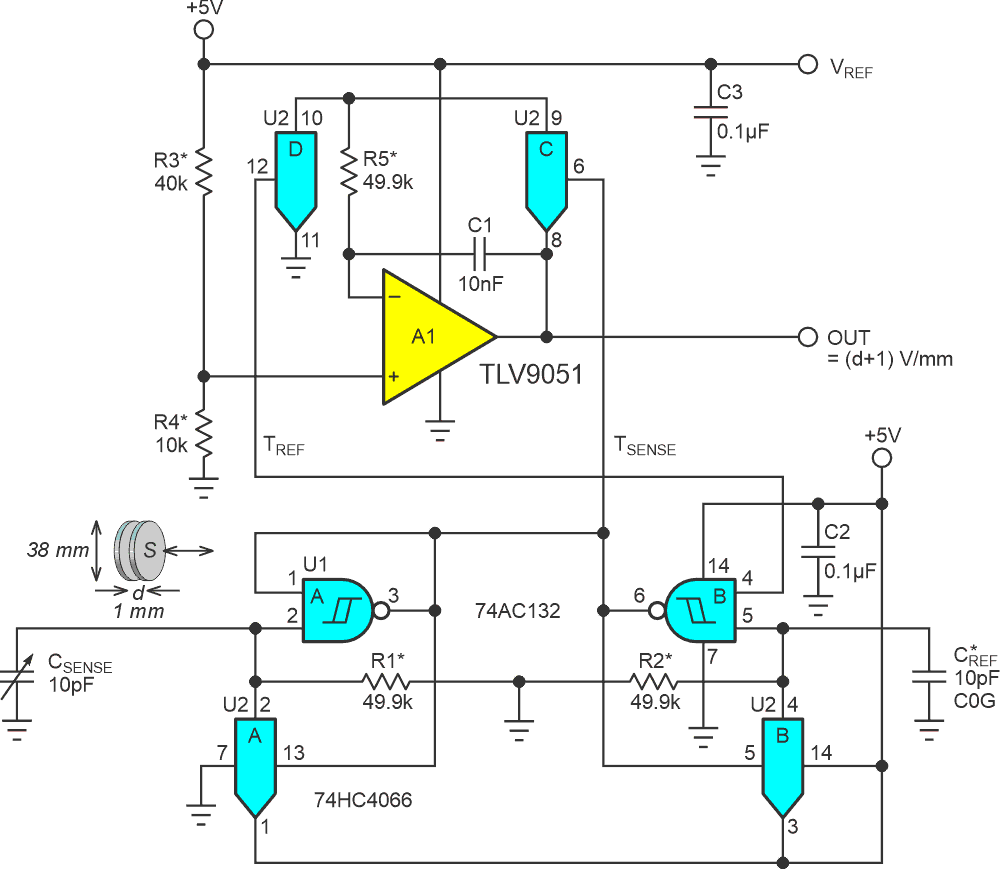
Figure 4 shows the resulting interface with added linearization circuitry. Just an added opamp, three resistors, and two non-critical caps did the trick. Here’s how it works.
 |
|
| Figure 4. | Averaging integrator A1 linearizes the displacement sensing response. R5 is shown as a precision type, albeit just out of force of habit. It, like the ON resistances of U2’s switches, actually cancels out. |
Each capacitance measurement cycle, the 500 ns TREF pulse causes 4066 switch U2d to deposit a quantum of charge on integrator A1’s summing node of
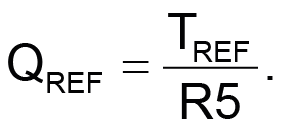
Meanwhile the sensor-capacitance proportional TSENSE pulse subtracts
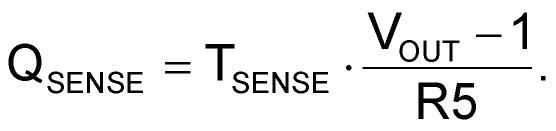
The charge balance is forced by A1 to maintain QSENSE = QREF, therefore

and
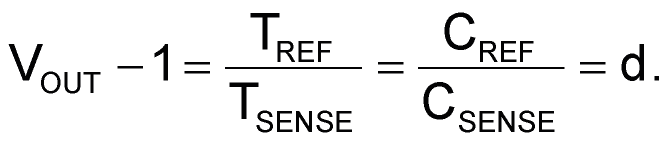
Note that R5 magically (?) disappears from the math.
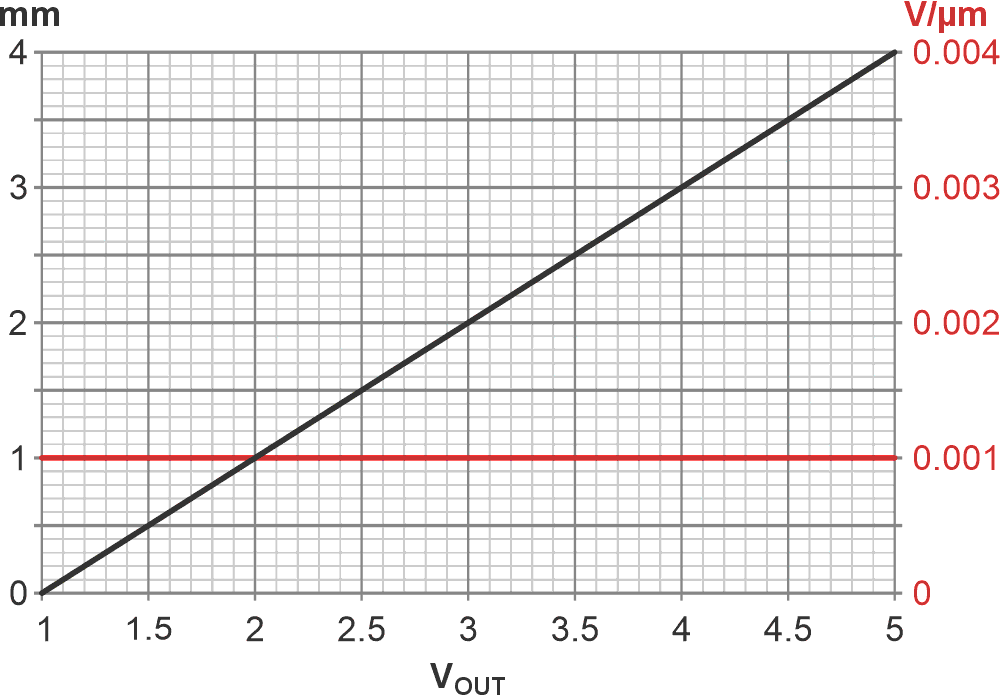
Figure 5 shows the straight-as-an-arrow-in-zero-gravity result.
 |
|
| Figure 5. | In this graph of the enhanced circuit results, the black curve equates to the sensor readout d in mm, with red at a constant 1 mV per micron resolution. |
Reference
- Woodward, Stephen. "~0.1% resolution capacitive position sensor."
- Simple Simon (nursery rhyme)